

How Noise Cancelling Headphones Can Improve Your Listening Experience
Noise cancelling headphones utilize microphones to detect ambient sounds and generate an anti-noise tone that blocks unwanted sounds. They are ideal for blocking out plane and train chatter However, they can't help you block out your friend's chatter or screeching breaks.
Active noise cancellation requires good isolation, either through padding your ears with a solid seal with earbuds or over-ear headphones. We've examined how well they can block lower-frequency sounds like train and traffic noise, too.
What is noise cancellation?
Noise cancelling is a feature that helps listeners focus on their music or audiobook without distraction from background noise. Noise cancelling headphones come with microphones that block out external sounds from getting to your ears. This lets you listen to your music or audiobook in complete peace.
Active noise cancellation, or ANC, is one of the most well-known headphone features in the market today. It is available on many different brands of headphones, with a variety of colors and sizes, and even on some budget models. The technology behind them is simple: ear cups or earbuds are equipped with tiny microphones that "listen" to ambient sound frequencies and then play back equal but opposite anti-noise waves to eliminate them before they reach your ears.
This is known as destructive interfering. The valleys and crests of waves cancel each other out, leaving only the music you're listening to. This is great for monotonous, continuous sounds like the drone of an airplane engine, or your colleague Bob who just can't seem to quit. However it's less effective for sudden or higher-frequency sounds that are harder to recognize and filter out, such as the sound of a keyboard, or the alarm sounding from your smartphone.
Another type of noise isolation is passive, which reduces noise by forming an ear-to-ear connection using the foam padding in the ear cups. This is a good option for those who don't need to rely on batteries to provide ANC functionality, but still want a quiet working environment, or at home.
All headphones require power to function, regardless of whether it's an audio processing or battery. While ANC can reduce most external noises, it isn't able to create an enveloping silence around your ears. If the sounds around you are loud enough, they'll get into your ears. It is essential to wear your headphones tightly enough so there aren't any gaps in the fit. This will allow you to get the full benefit of ANC.
How do you make it work?
The technology behind noise cancelling headsets involves tiny microphones in the earcups, or buds, that listen to sounds around you. They're then processed inside the headphones to create an opposite sound wave which effectively blocks out the sounds and blocks them from reaching your ears.
Air molecules oscillate and produce sound waves. This means that sound waves have a size or amplitude. This is measured by the distance between the peaks on an unsteady graph. Sound waves with greater amplifies are larger, while those with shorter magnitudes are smaller. ANC headphones use this to create the opposite sound of the sounds that you hear around you.
ANC headsets have numerous features that block out ambient noises such as feedback microphones and ANC chipsets. These chips make use of algorithms to reverse incoming sound signals and then emit an opposite signal, which is similar to launching anti-ballistic missiles to destroy the warheads coming in (again think of the military-grade countermeasures seen in war movies).
These opponing signals are produced by two ANC drivers inside each ear cup. When ANC is activated by pressing the button on your headset, the sounds of the surrounding environment are reduced or even eliminated.
The technology behind ANC is impressive but it comes with some compromises. The additional electronics needed to enable this technology can add weight and size to your headphones, making them heavier than similar-looking models. They also use more power, which can lead to a shorter battery life and possibly high-frequency hiss.
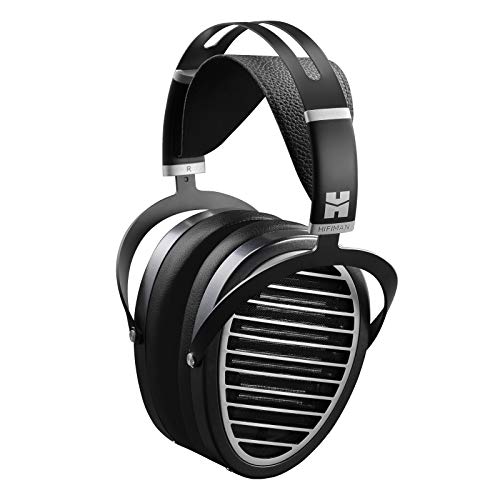
Another problem is that a lot of users have reported experiencing dizziness or disorientation while wearing ANC headphones. This can be a bit frustrating, but it is usually caused by something else, not necessarily the ANC.
The good news is that the latest ANC headphones are beginning to address some of these issues. The Bowers & Wilkins PX7, for instance, comes with various ANC modes like "office", 'plane' and 'city', along with an adjustment slider that lets you customize the volume of external sound you want to let through. Apple's latest AirPods Pro 2 also feature a similar function, with 'Ambient Aware mode that digitally adapts the level of ANC to the surroundings.
What are the top headphones for noise cancellation?
Noise cancelling headphones will improve your listening experience. They can help you concentrate in the workplace or block out engine noise on trains, planes and buses. These headphones are great for commuting or working at home. They are compatible with all audio devices, including smartphones, tablets and laptops. They can be pricey however, there's a pair of wireless ANC headphones to suit every budget.
The most effective pair of headphones that block out noise will be comfortable to wear for long periods, with a good seal around your ears. The battery life should last at least 30 hours, which is enough to last you through your daily commute or working day. Make sure whether the audio source is supported, whether that be Bluetooth or USB-C.
Over-ear headphones are typically more comfortable than in-ear designs. They feature a wider headband and padded cups that sit over your ears, which helps to keep them in place for longer. They also have a better chance of blocking out ambient sound. There are exceptions, however, and the best headphones for noise cancellation will depend on your lifestyle and music preferences.
Most over-ear headphones provide some degree of noise isolation However, the degree of reduction is going to vary greatly by design and the way they fit your ears. An insufficient fit could let in more ambient noise, and it can even affect the quality of the bass. Try swapping out the stock tips of your headphones to see if this improves the fit and decreases ambient noise. This is also compatible with earbuds of all types.
In-ear headphones are less comfortable to wear for long listening sessions because they do not sit on your ears, instead, but inside them. They may be more comfortable when you tilt them forwards or backwards to adjust their fit. They are also lighter, which makes them more convenient to carry and more portable. In our tests, all earbuds provide a certain amount of noise cancellation, but it's not as impressive as with over-ear headphones.
What should I look out for when buying noise cancelling headphones
The best noise cancelling headphones reduce the background noise so that you can concentrate on your music without having to worry about your surroundings. To accomplish this, they typically make use of active noise cancellation (ANC) but not all ANC headsets are created in the same way. It's crucial to think about the type of ANC used, if they're over-ear or in-ear, and the quality of their construction.
In-ear and over-ear headphones provide excellent noise isolation. While over-ear headphones can be more comfortable during long durations, in-ear models offer greater mobility and are less bulky. Over-ear headphones are more expensive however, they usually have better sound. In-ear models are more affordable, but still offer a great sound.
Some ANC headphones have different levels of ANC which gives you the option to tailor the level to the situation in present. You may choose to turn off ANC on an airplane, on public transport, or even at home, but switch it back on when at the office or home to keep out the whirrr of your PC's cooling fan or the lawn mower of your neighbor. A lot of headphones have a 'transparency mode' which allows some external noises to pass through, meaning you can hear important sounds such as traffic or conversation.
The best noise cancelling headphones come with ANC and Bluetooth for wireless listening. Some support the aptX and aptX HD Bluetooth codecs, which deliver superior audio quality compared to traditional Bluetooth.
While there are some ANC headphones that are priced less than PS50 You'll likely find the most value in a pair of over-ear headphones like the Bose QC35 II. Their ANC is superb, with a slight delay between tracks to let you hear your voice when talking and are high-quality and sound crisp and full of detail.
This Web page -canceling headphones are also worth looking into, particularly if your children have sensory issues and require assistance in processing auditory stimuli. Some even include popular cartoons or video games. They are more comfortable for children than conventional headphones and typically have parental controls that are crucial, like volume-limiting features to ensure safe listening levels.